


Following the ministerial decision of December 4, 2024, a plenary committee bringing together nearly 70 elected officials from Isère, Savoie, and Rhône was organized by the Prefect of the Auvergne-Rhône-Alpes region. This meeting provided an opportunity to present the project’s governance, review progress, and detail the upcoming dialogue process.
Various Exchange Mechanisms
Information meetings were held by the Prefects of Savoie and Isère in February and May 2025 to engage with elected officials from each department regarding their expectations and concerns.
Bilateral meetings were also organized with the municipalities and public inter-municipal cooperation bodies (EPCI) affected by the route to clarify local issues. These exchanges, which will continue throughout the studies, represent a key step in building trust with the regions. They aim to cover a wide range of topics, including:
- Minimizing environmental and landscape impacts,
- Implementing noise protection measures,
- Restoring the road network, and more.
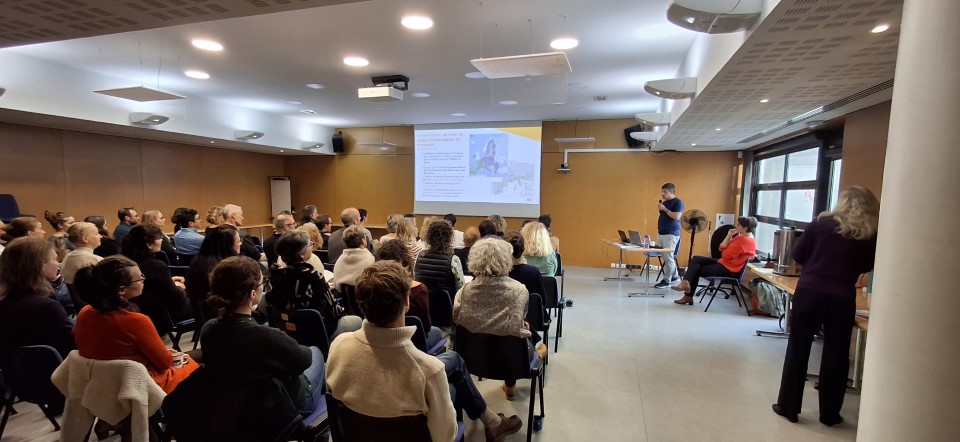
Territorial Consultation Commissions (CTC) are voluntary consultation bodies, established following the reservations of the Inquiry Commission accompanying the Declaration of Public Utility (DUP) of 2013.
Four CTCs have been created to cover the various sectors traversed or affected by the French section of the Lyon-Turin project:
- Plains of Eastern Lyon, Bourbre, and Catelan (Rhône and Isère departments)
- Dauphiné Valleys (Isère department)
- Savoyard Foreland and Chartreuse (Savoie department)
- Combe de Savoie, Belledonne, and Maurienne (Isère and Savoie departments).
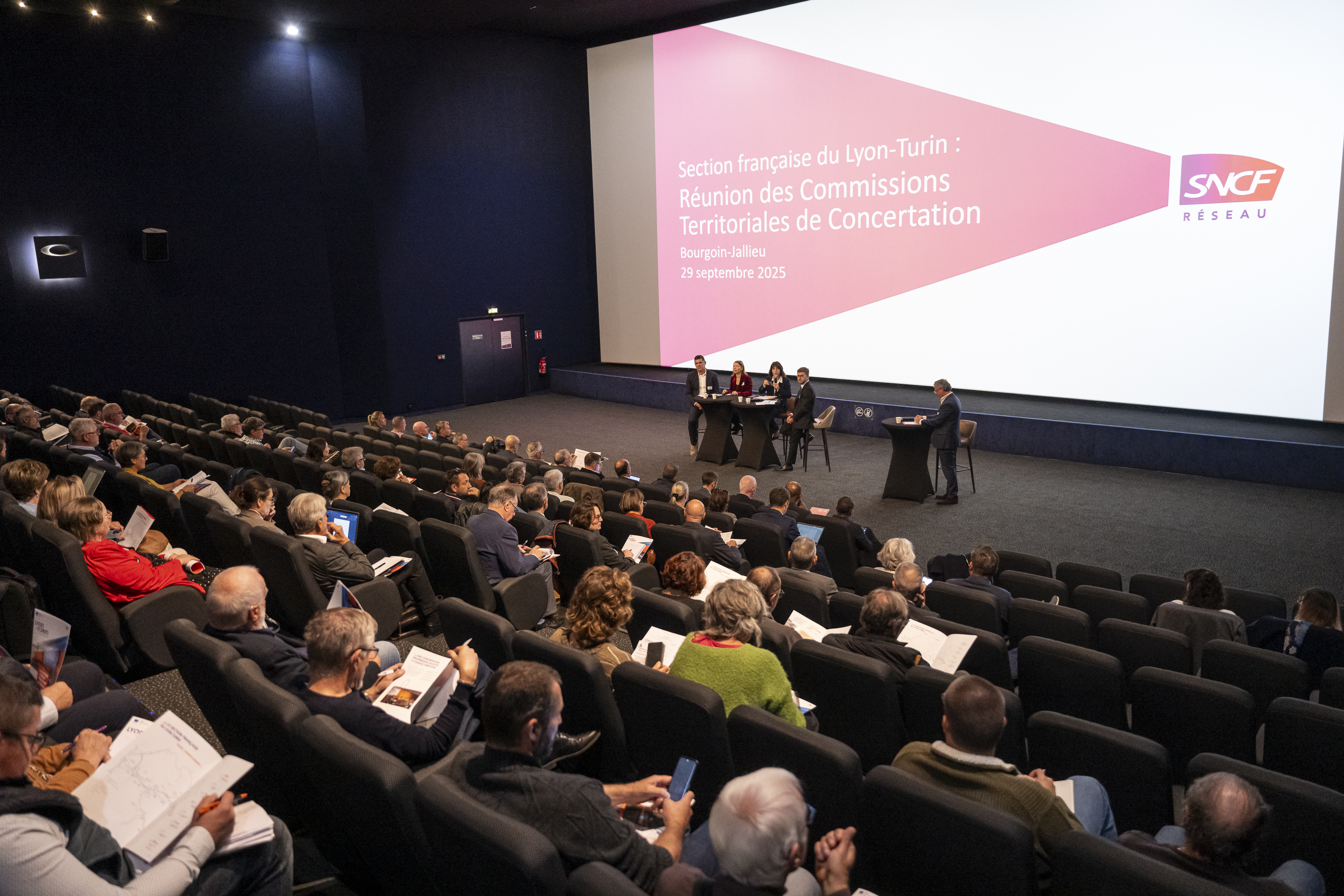
To strengthen dialogue with the region, the first Territorial Consultation Commissions (CTC) were held on September 26 and 29 in Chambéry and Bourgoin-Jallieu. Chaired by the Prefects of Savoie and Isère, these commissions will now meet at least twice a year, bringing together elected officials, socio-economic stakeholders, and associations.
Their purpose is to enlighten and enrich the project, while serving as a working space to share challenges, exchange perspectives, and collectively contribute to the project’s development.
These first two meetings provided an opportunity to review the project’s relaunch and outline upcoming steps. They also served as a forum for dialogue, allowing participants to express their expectations and concerns. The project team provided initial clarifications and will continue this collaborative approach to develop the project’s details alongside local stakeholders as studies progress.